What are the Commonwealth Games by Freya John
They say all good things come in threes, but so many global sporting events, including the Olympics & Paralympics, the football World Cup and the Commonwealth Games occur every four years. And whilst the first two are renowned for their world-fame and historic roots, the latter is perhaps less well-known. So, as we approach the imminent Commonwealth Games set to commence on Thursday 23rd July in Glasgow, it feels only right to dive into their historical significance and origins.
What is the Commonwealth?
The Commonwealth of Nations is a voluntary political association of 56 independent countries, almost all of which were formerly under British rule. Headed by King Charles III, the organisation spans Africa, the Americas, Asia, Europe, and the Pacific, encompassing over 2.5 billion people—nearly a third of the world’s population.
How did the Commonwealth Games begin?
British Empire Games
Whilst originally proposed in 1891 before the first modern Olympics, the Games were initially called the British Empire Games. Hamilton, Canada hosted the first competition in 1930 and athletes were sent by Australia, Bermuda, British Guyana, Canada, England, Northern Ireland, Newfoundland, New Zealand, Scotland, South Africa and Wales. Male athletes took part in athletics, boxing, lawn bowls, rowing, swimming and diving and wrestling, whilst female athletes only competed in the water sports.
Commonwealth & British Empire Games
After venturing abroad to other locations including England and Australia, in 1954, the games returned to Canada, this time in Vancouver, no longer as the British Empire Games, but under the title of the Commonwealth and British Empire Games. Notable events during these games included Sir Roger Bannister and John Landy running the mile in under four minutes.
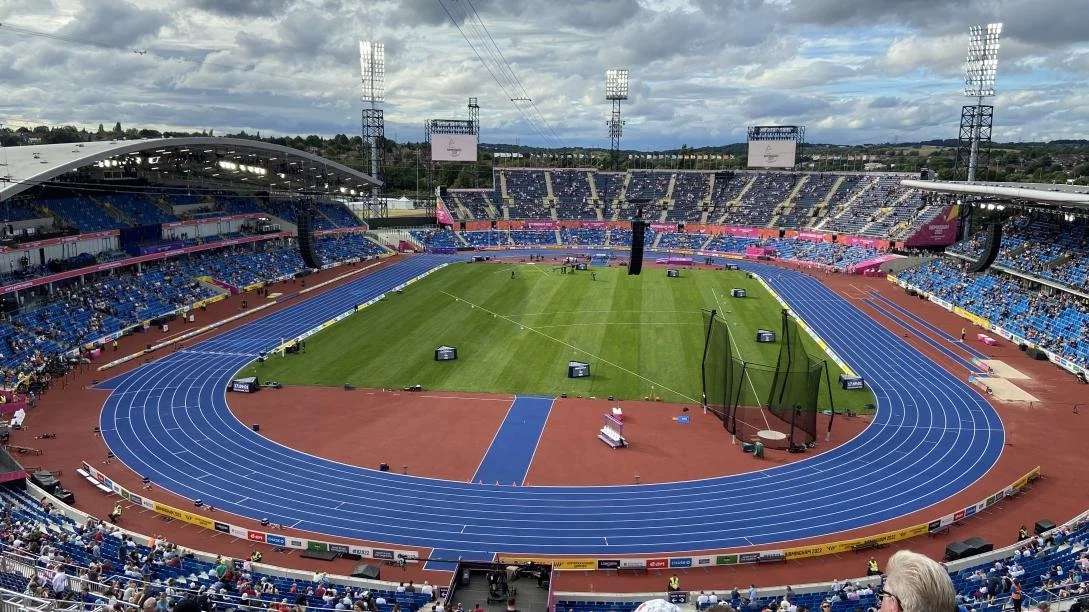
The Alexander Stadium in Birmingham, England where the 2022 Commonwealth Games were held.
The following games took place in Cardiff and, ahead of the event, various sports stars signed a letter to The Times newspaper urging international federations to ensure racial equality between athletes, a letter that coincided with protests in South Wales against the all-white South African team. Due to the country’s apartheid policy, South Africa was forced to withdraw from the Commonwealth and thus barred from the games but reinstated in 1994 after the abolition of apartheid.
Commonwealth Games
Once again in 1978, the games returned to Canada, this time undergoing their final name change to their current title. In 1994, disabled athletes were first included in the games and in 2002 in Manchester, the para events became compulsory with the successes of these athletes included in the overall medal counts for each country. The 2018 games were also notable for their sense of inclusivity as, like the Paris Olympics in 2024, there was parity between the male and female competitors.
Commonwealth Games, Glasgow, 2026
This year, 2026, athletes from 74 nations and territories will be competing across 10 sports. The sports will be
basketball and wheelchair basketball,
artistic gymnastics,
athletics including para athletics,
boxing,
track cycling including para track cycling,
judo,
netball,
bowls including para bowls,
swimming including para swimming and
weightlifting including para weightlifting.
For some sports such as netball and bowls, this is their only international platform event and so the Commonwealth Games carry a great deal of importance. The Games are an opportunity to showcase their sport on a global stage and attract new athletes.
The Commonwealth Games start on 23 July.