From the Football Field to the Future in Teso, Uganda
From the Football Field to the Future: How a Grassroots Initiative is Transforming Girls’ Lives in Teso, Uganda
In Teso, a rural region of eastern Uganda, adolescent pregnancy and school dropout rates remain among the highest in the country. For many girls, poverty, gender inequality, and climate pressures shape their everyday lives and limits what feels possible for the future.
However, within this region football is having a profound impact on girls’ health, wellbeing, and education. What began as a small grassroots initiative with just seven girls has grown into a programme now supporting 242 young players. Today, 57 girls have secured scholarships to attend boarding schools and universities. The team has gone on to become Uganda’s National Under-21 Champions, with players competing internationally in Kenya and China.
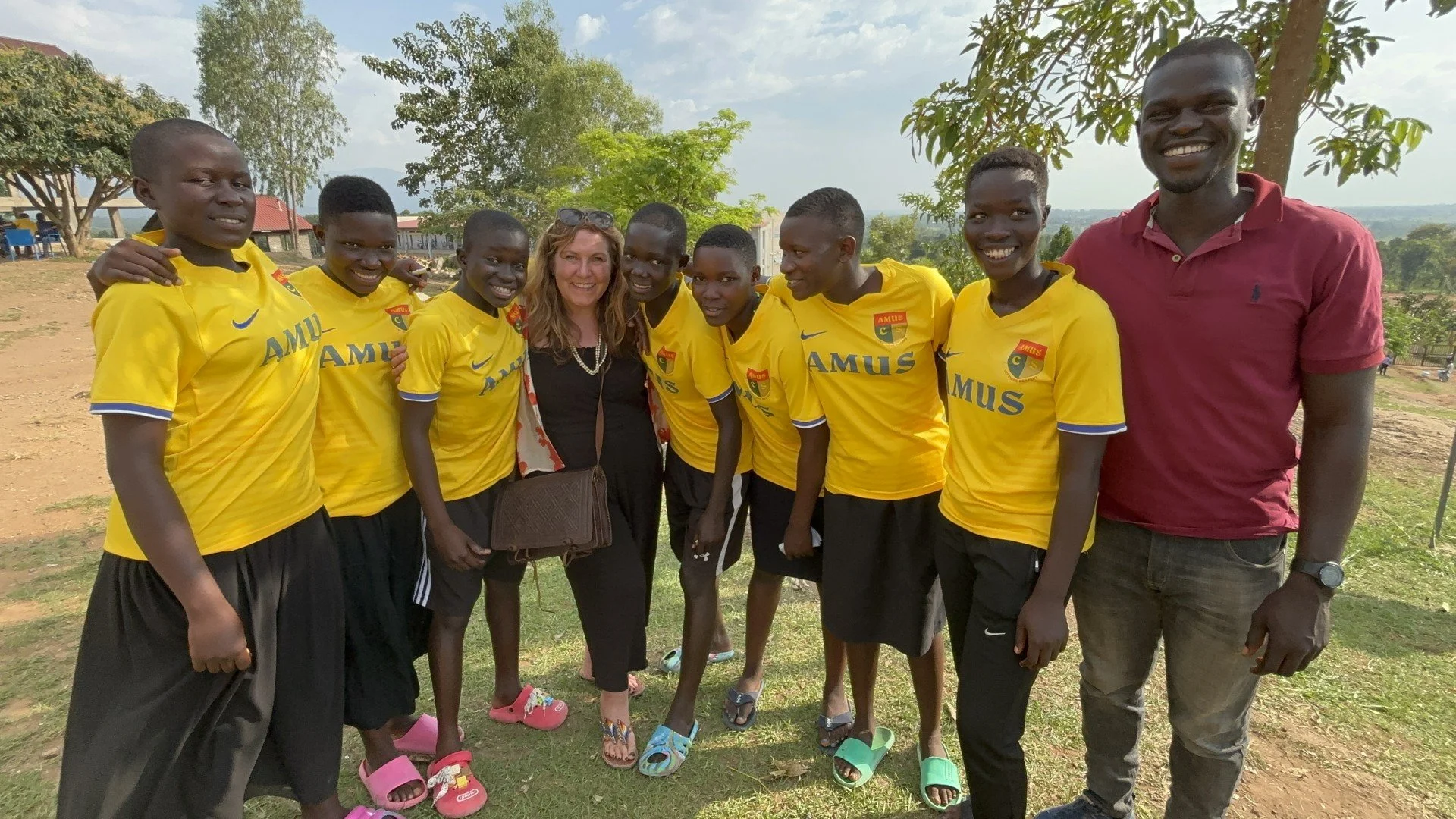
Sally, Charles Obore (coach) and some of the team (credit Sonyanga Weblan)
The Teso football community
For the girls in Teso who are taking part in this project football has become far more than a sport. It has created a protective space. During COVID-19, when early pregnancy rates rose sharply across the region, not a single girl in the programme became pregnant. Football offered structure, routine, and somewhere safe to be during a time when many girls were at increased risk.
Through training, mentorship, and peer support, the girls are building confidence and learning about their health and rights. They are beginning to make decisions about their own futures. Alongside football, they are also learning practical skills such as tailoring and animal rearing, helping them contribute towards their education and gain a sense of independence.
As one player explained,
“It’s changed my life. Now all I think about is football and education. I have the confidence to speak and say ‘no’. Without football, we would have conceived early. It keeps us busy.”
For many of the girls, football is what keeps them in school. It gives them something to work towards, and importantly, something to believe in.
How football used to be perceived
When the programme first began, it was not easy. Football was widely seen by communities involved as a boys’ game, and girls playing in shorts was considered inappropriate. Some parents worried that the initiative was spoiling their daughters. Even the girls themselves were unsure, at first, how to step onto the pitch and be seen in that space.
Change came about slowly, through persistence, conversation, and the visible impact the programme was having. Over time, attitudes began to shift. The project is now something the communities are very proud of.
The turning point came when the programme began to include boys. As the founder and coach, Charles Obore, put it, “We cannot raise strong queens for broken kings.” If the aim was to support girls to thrive, then boys also needed to be part of that journey. You cannot meaningfully advance gender equality without engaging boys and young men in the conversation.
“ We cannot raise strong queens for broken kings.”
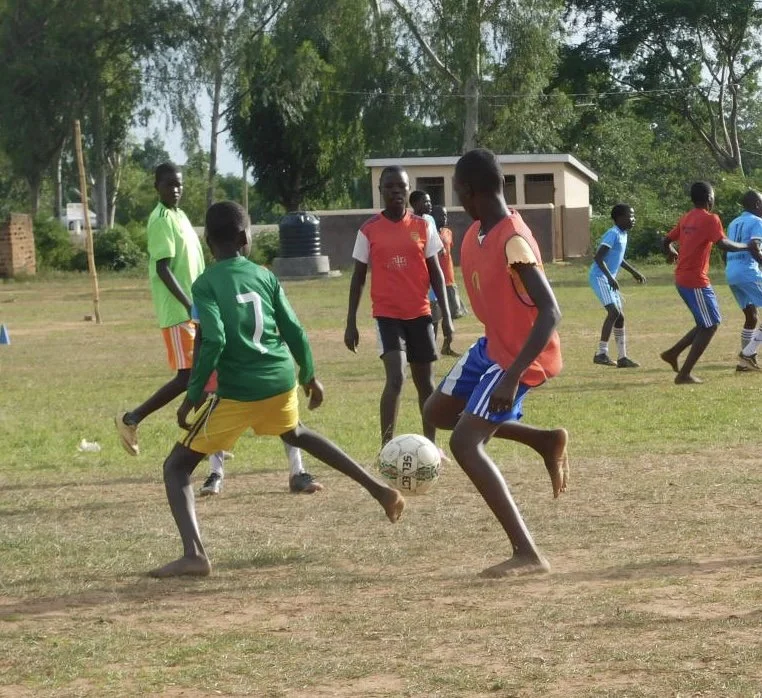
The girls in action - credit Sally Bashford-Squires
Bringing boys and girls together has strengthened the programme in ways that were not initially expected. It has encouraged respect, reduced tension, and created a shared sense that this is something for all children. Families who were once hesitant are now asking for more opportunities for their daughters, recognising the difference it is making.
“I am because we are”
At the heart of all of this is a strong sense of togetherness. The programme reflects a way of thinking deeply embedded in many African contexts, often expressed through the philosophy of Ubuntu, meaning “I am because we are.” It speaks to the idea that a person becomes who they are through others. In this sense, success is not about a single star player, but about what can be achieved when everyone is supported to grow.
This is visible not only in how the team plays, but in how the programme is run. Matches are held in the village allowing the community to feel part of it. Parents, teachers, and local leaders are involved. When the team wins, it is not just the players celebrating. The whole community shares in that moment.
Impact of the programme
The impact of the programme becomes even clearer through the stories of the girls themselves. Agwilliam, a player from Kumi District, began her football journey in 2019. She describes those early days as difficult, with parents sometimes quarrelling with the coaches and questioning the programme. But she also speaks about the care and persistence that kept things going, and how that has shaped who she is today.
Through football, she travelled to Tanzania for the East African Games, something she had never imagined possible. “It was my first time to be on an aeroplane,” she said, “and it was because of football. I still believe I have more opportunities ahead of me through football and education.”
Her journey also reflects something deeper about the programme. When she returned from Tanzania, she brought her coach a small gift. As Charles recalls, “She brought me a whistle and said, ‘Coach, I bought this for you so you can help many others achieve what I have achieved.’”. For him, that moment was quietly powerful. It showed that what was being built was not just opportunity for individuals, but something that could ripple outwards, shaping others in the community.
I have worked alongside this initiative through my NGO for over ten years, supporting its development and learning from it. During that time, I have seen how change happens not through large-scale interventions, but through small, consistent efforts that are rooted in the community.
This has also shaped my wider work, including the participatory film Eitai, which focused on community-led storytelling and local knowledge. Across these experiences, one thing has become clear. Lasting change happens when people are given the space to lead, to shape their own futures, and to build on what already exists within their communities.
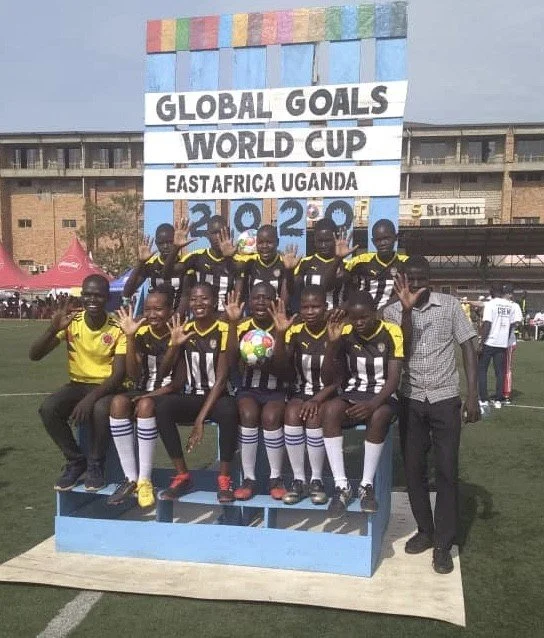
Global Goals World Cup (photo credit Charles Obore)
This programme may be centred around football, but what it offers goes much further. It creates space for girls to stay in education, to build confidence, and to imagine different futures. It brings communities together in ways that challenge long-held assumptions about gender and opportunity. On a football field in Teso, change is happening quietly but powerfully; for the girls who run onto that pitch each day, the future is beginning to look very different.
By Dr Sally Bashford-Squires, University of Greenwich