Ruby Bishop, wheelchair tennis player
Ruby Bishop is a British wheelchair tennis player and we chatted to her while she was in Australia, earlier this year.
Please tell us about your journey into tennis and your career so far
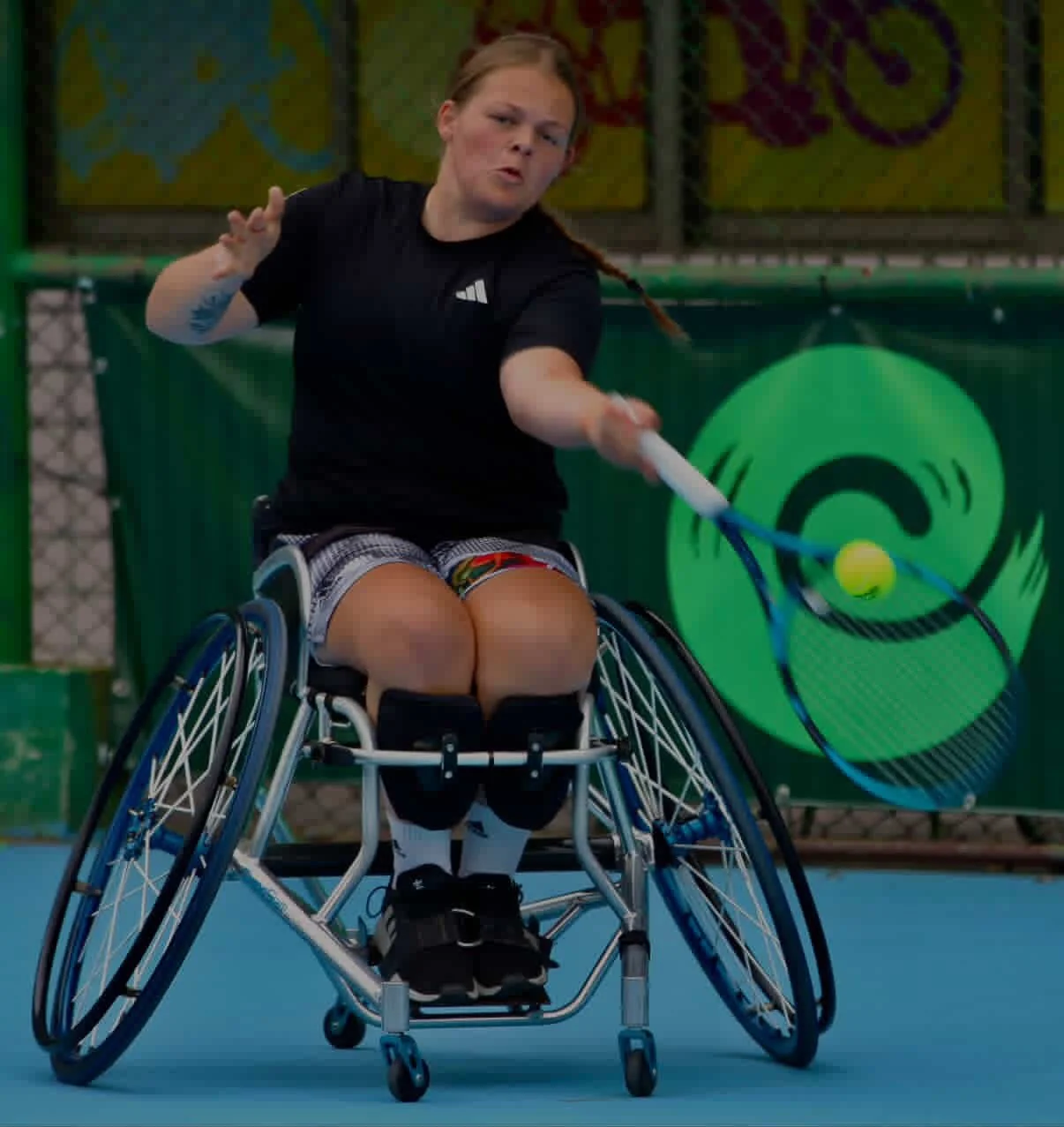
I started playing wheelchair tennis after attending a Tennis Foundation “have-a-go” day, which was designed to give people the opportunity to try the sport and discover their potential. From there, I was introduced to the professional side of wheelchair tennis and selected for the Great Britain junior programme.
That pathway led me to compete at junior Grand Slams representing GB, where I became world number three in the girls’ rankings and Great Britain’s number one. I’m now competing on the senior professional tour full time, which is my job.
Were you always sporty, Ruby?
Growing up, I never really had an idol I looked up to. I didn’t feel like sport was something I could do, so I never saw myself reflected in athletes or thought to look up to one. It wasn’t until I found wheelchair tennis that that changed.
When I discovered the sport, I came across Jordanne Whiley. She’s a legend of wheelchair tennis — a multiple Grand Slam champion and Paralympic medallist — and for the first time, I saw someone who made me believe it could be possible for me too. One moment that really stayed with me was when she gave me her old tennis chair. That was incredibly special. At the time, I was still that kid sitting in the special needs room at school, making PowerPoints about becoming a tennis player. To now call her a friend and teammate feels surreal.
You competed in Australia - what was that experience like?
This year was my first time competing in Australia, and it was an incredible experience. The lifestyle there is truly special, and the atmosphere around training and competition was amazing. I had the opportunity to train and play against the best players in the world, including competing against the world number one and number three. It was an opportunity I knew I had to take, and one I’ll always value.
Do you travel with a team or compete solo?
I have a strong support team, including my individual coach, a hitter, physio, and psychologist. However, when I travel abroad, I usually go solo — it’s just me out there. I stay connected through group chats and regular communication, but I’m playing matches on my own.
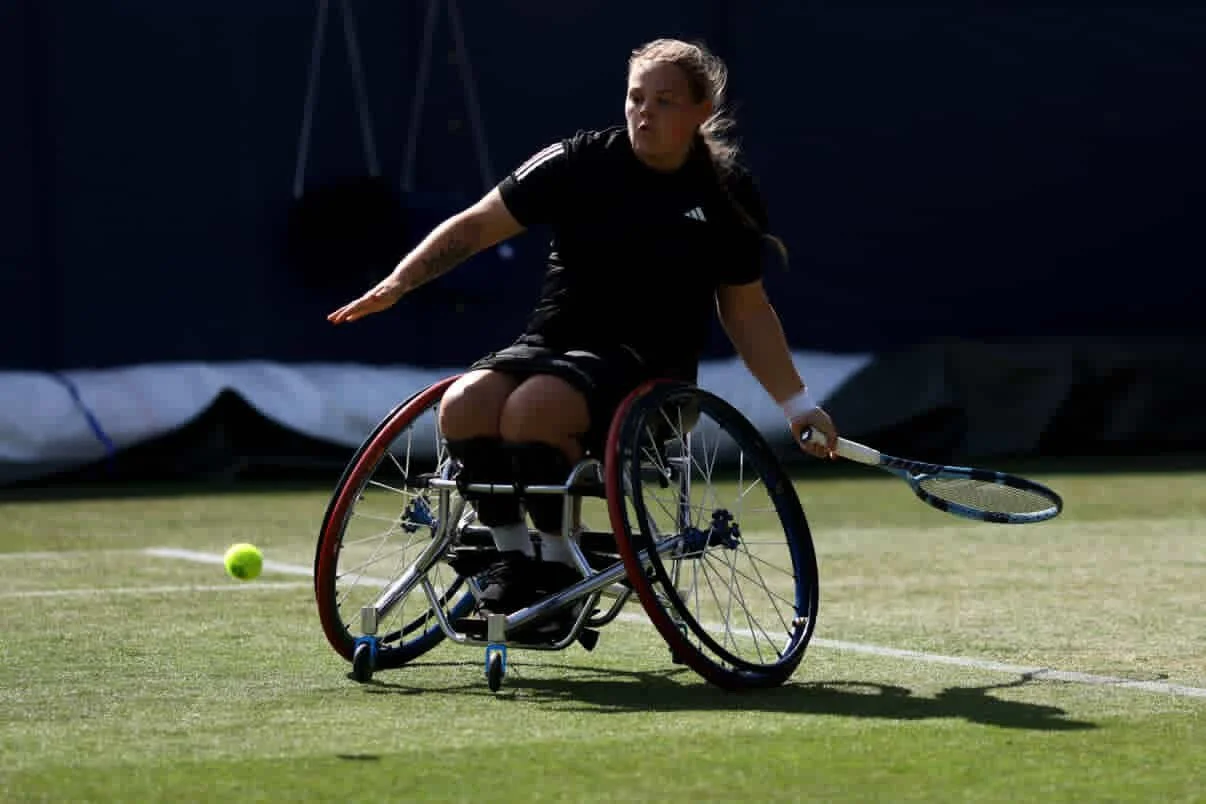
If I could bring my coach with me more often, I absolutely would. Unfortunately, in para sport the funding isn’t great unless you’re consistently in the top 10, so travel support is limited. That’s one of the realities of the sport.
What are you building towards right now in your wheelchair tennis career?
Right now, I’m building consistency, strength, and belief at the highest level of the game. I want to keep climbing the rankings, compete at Grand Slams, challenge for titles, and push the standard of women’s wheelchair tennis forward.
I’m also focused on building a legacy — one rooted in performance, representation, and leaving the sport more accessible and inclusive than I found it.
What are some of your proudest moments in this sport?
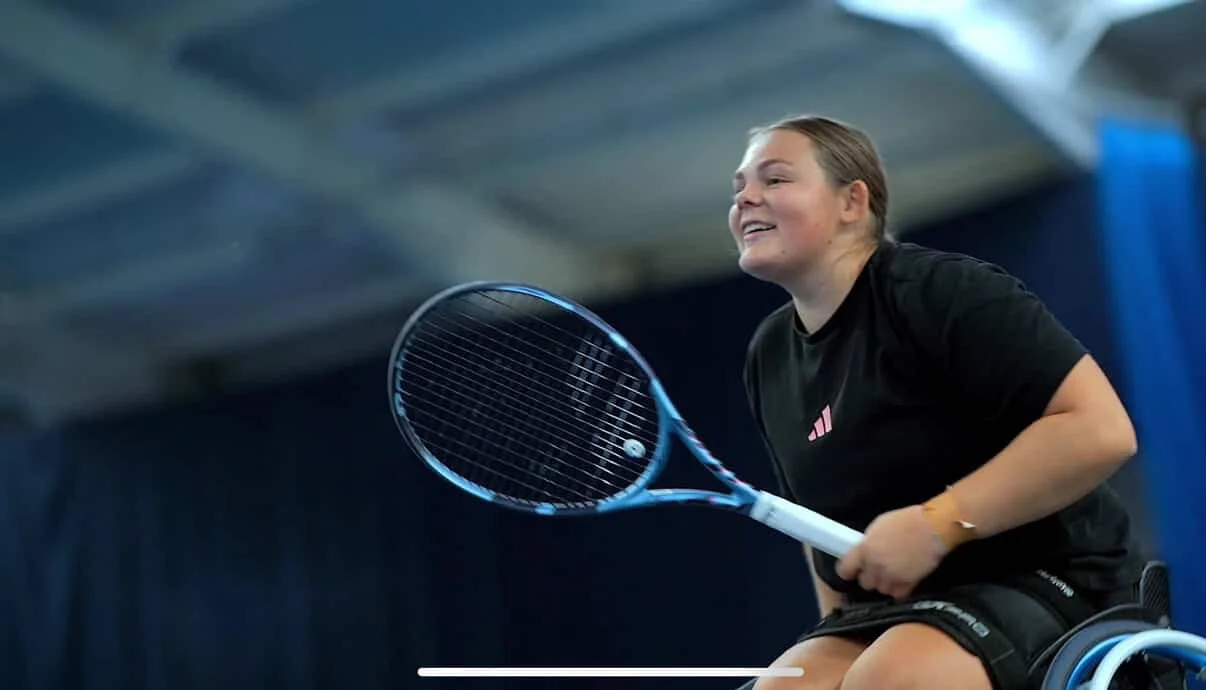
Some of my proudest moments include representing Great Britain at both junior and senior level, competing at the US Open as a junior, and playing internationally. Winning over 50 ITF titles has been a huge achievement, but I’m equally proud of being an advocate for young disabled kids. Using my platform to inspire others and push for greater inclusion in sport means just as much to me as any result on court.
Coming back from injury during the Paralympic cycle — which meant missing out on Paris — was heartbreaking. But I knew I was doing what was best for my long-term physical health, and now I’m at a career-high ranking of 29 in the world, which makes that journey even more meaningful.
Talking of greater inclusion, what is Ruby’s law?
I was never included in PE growing up. No adaptive equipment in the cupboard. No choice. Today I’m an athlete — but school sport shut the door before I even had the chance to begin.
I’m campaigning for Ruby’s Law, a national change that will:
• Make sports wheelchairs standard PE equipment in every school
• Train teachers in inclusive PE delivery
• Ensure disabled pupils participate, not spectate
• Use disability sport to educate ALL pupils about inclusion and equality
I granted my old school the first sport wheelchair inline with my campaign.
Ruby’s Law: A Campaign to Tackle discrimination within PE let’s go Beyond the Barriers
What do you think little Ruby would think of where you are now?
Sometimes I think about how far “little Ruby” has come, and if you’d told me back then that this would be my life, I honestly wouldn’t have believed you. Jordanne definitely played a role in shaping my journey, and even now, I’ll still reach out to her for advice or a chat when I need it.
Tennis is a tough sport. You really have to do it for you and for your “why.” You train constantly, travel solo, spend a lot of time away from home, and miss your family. Along the way, I’ve faced plenty of barriers — from injury, to finding the right team, to balancing school, and supporting my family through illness. None of that is easy.
Because of that, I’ve learned to acknowledge myself and be proud that I kept going. I try to reflect on the fact that I get to live this life — not that I have to. And now, being able to be that inspiration for other girls and boys with disabilities, especially those struggling in school like I once did, is something I’m incredibly proud of.
Copyright We are Girls in Sport 2026
Please contact hello@Wearegirlsinsport.com for usage and replication